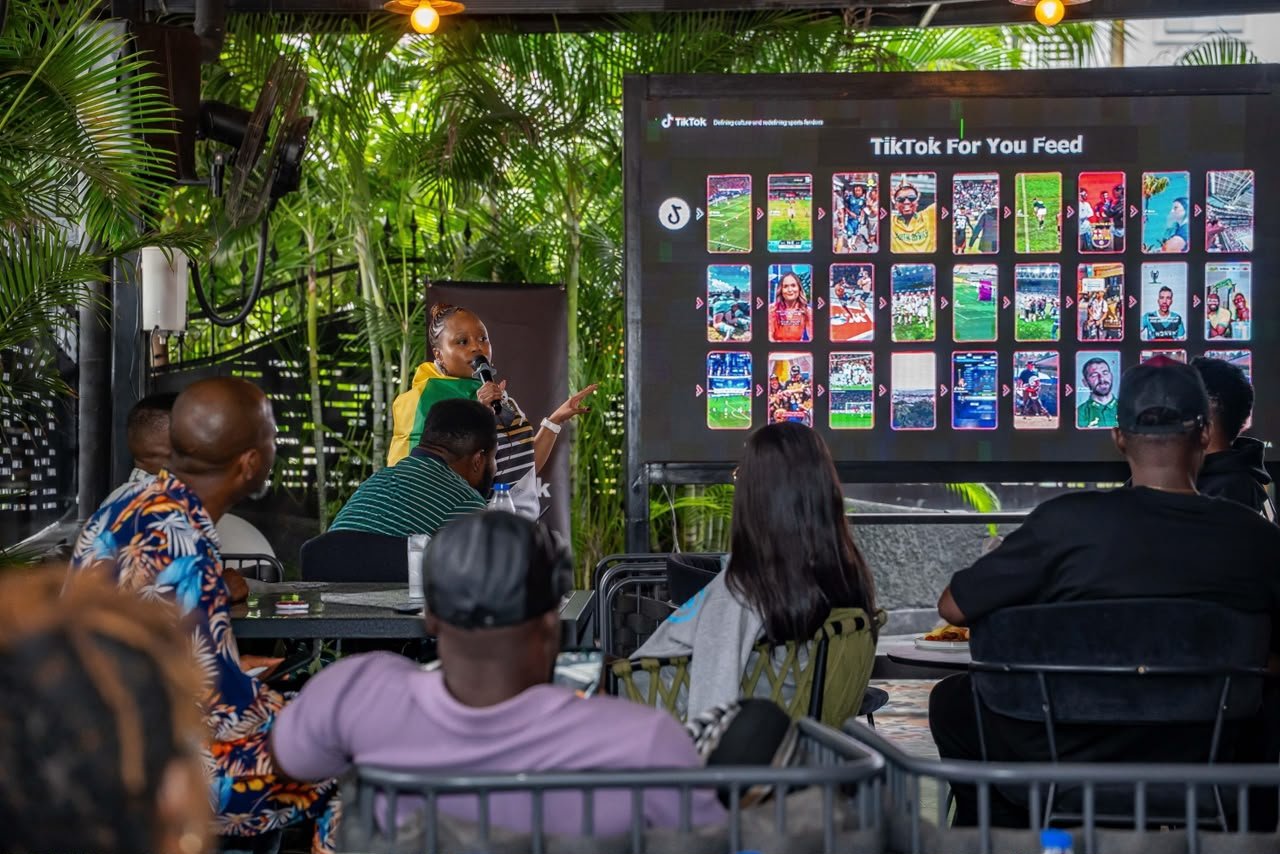
The final whistle used to end the conversation. Now it starts one. From AFCON celebrations to dressing-room walk-ins, the centre of gravity in sports fandom has quietly drifted away from the broadcast box and onto a vertical screen and nowhere is that shift more visible than in Nigeria.
There is a particular kind of noise that follows a goal. It used to live in living rooms and viewing centers, in the half-second delay between the stadium roar on television and the eruption on your street. That noise has not disappeared, it has migrated. Today it lands as a duet, a stitched reaction, a slow-motion edit set to Afrobeats, posted before the replay has even finished airing. The game still happens on the pitch, but the culture happens on TikTok.
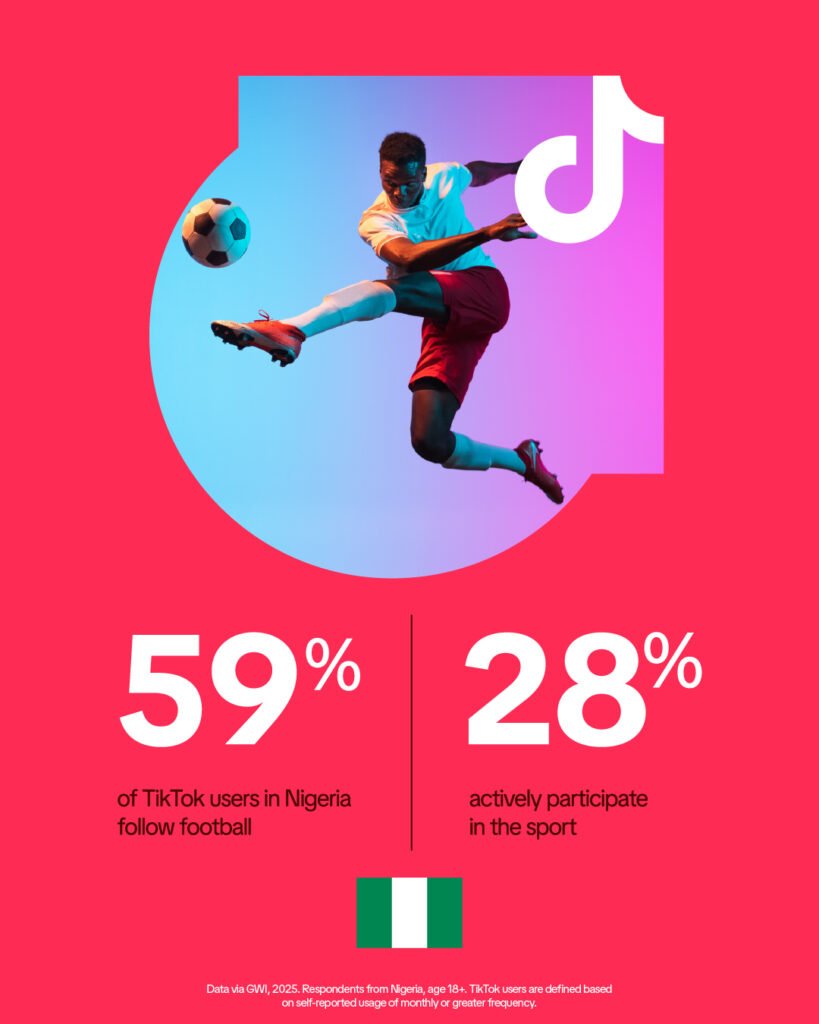
New figures shared by TikTok make the scale of that migration hard to ignore. According to research conducted with GWI, 59% of TikTok users in Nigeria follow football, and 28% say they actively play the sport themselves. Read those numbers back slowly. In a country where football is less a pastime than a national reflex, nearly six in ten people on the app are arriving with the game already on their minds. TikTok did not have to teach Nigeria to love football, it simply built the room where that love could be performed, argued over and shared in real time.
From Highlight Reel to Home Ground
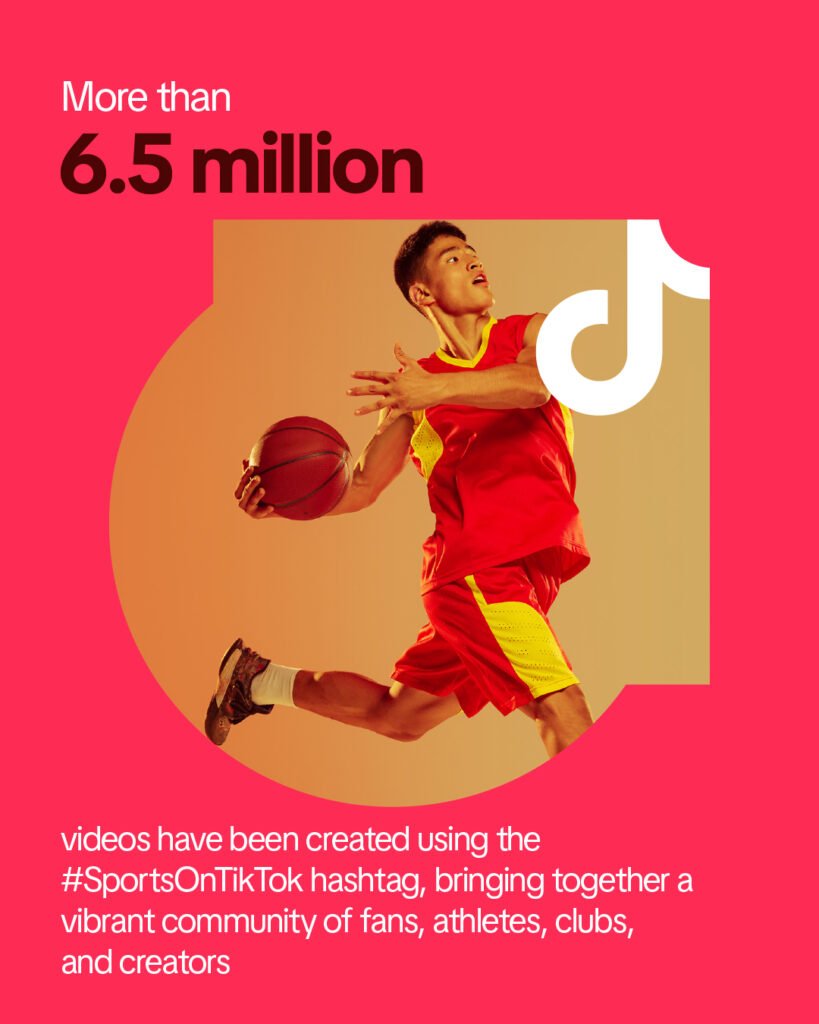
For years, the platform was treated as a place to catch sport; a clip here, a skill compilation there, the digital equivalent of channel-surfing past the match. That framing is now outdated. Under the #SportsOnTikTok banner, more than 6.5 million videos have been created, pulling fans, athletes, clubs and creators into a single, restless conversation. The content is not a substitute for the sport. It is a second half that never ends.
What makes this distinct from the highlight culture of older platforms is participation. A TikTok asks you to respond with a reaction, a counter-take, a tactical breakdown filmed from a bedroom, a meme that reframes a missed penalty as comedy or tragedy depending on your allegiance. The line between spectator and broadcaster has thinned to the point of disappearing. Everyone with a phone is, briefly, a pundit.
Africa’s Co-Viewing Continent
Across the continent, TikTok has become something closer to a stadium concourse than a media channel. It has become the place fans gather before, during and long after the match to relive it together. Reactions, commentary, highlights, fan debates and creator-led storytelling keep the energy of a fixture alive well past the final whistle, turning a 90-minute event into a multi-day cultural moment.
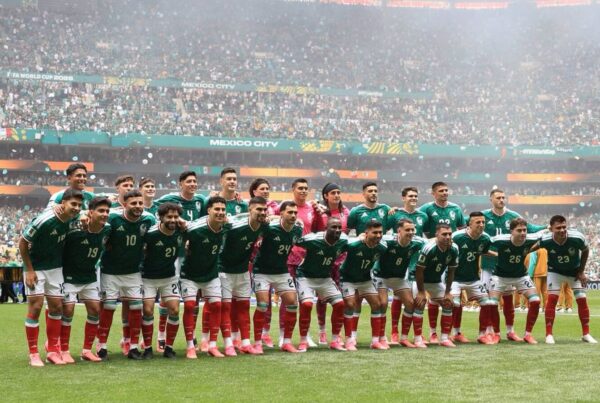
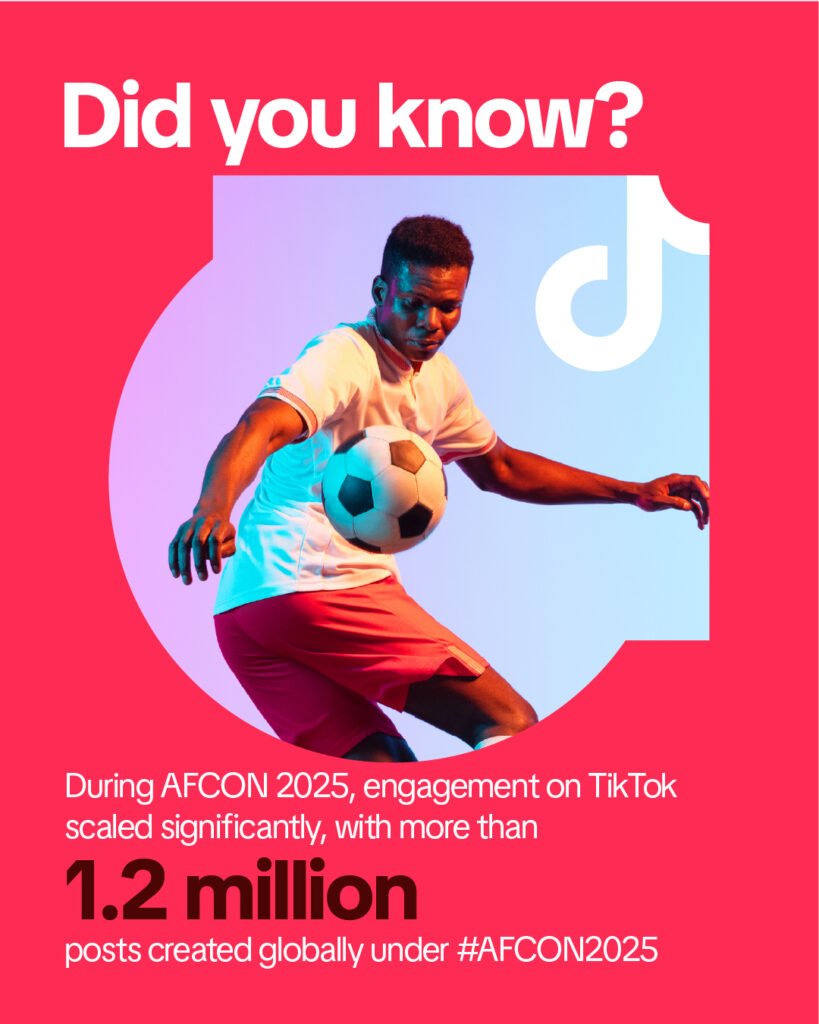
AFCON 2025 offered a clear demonstration. Engagement on the platform scaled sharply, with more than 1.2 million posts created globally under #AFCON2025 and, tellingly, 28.6% of those came from Sub-Saharan Africa alone. For a region whose footballing brilliance has often been narrated from elsewhere, that statistic carries weight. The story of African football, during its flagship tournament, was being told by Africans, in their own voices, at scale.
In Nigeria specifically, that enthusiasm has organised itself around an ecosystem of hashtags like #soccer, #football, #supereagles, #naijafootball, each functioning as a live hub for reactions, commentary and match-day conversation. These are gathering points, the digital equivalent of knowing which bar the away fans drink in.
The Second Screen That Drives the First
A common assumption is that short-form video cannibalises live sport meaning that if fans are scrolling, they are not watching. TikTok’s own research suggests the opposite relationship. Globally, 85% of fans say they use the platform as a second-screen experience, with the app in one hand and the match in front of them. Rather than competing with the broadcast, it amplifies it.
The pull extends in both directions. 42% of users say they are more likely to tune into a live match after encountering sports content on TikTok, and 90% take at least one off-platform action after viewing i.e. searching a player, following a club, buying in, etc. The fan-made layer matters too: 72% of global users say they enjoy edits, reaction videos and other creator-made sports content. The audience is consuming the game and still recruiting others into it.
Women Are Rewriting Who the Fan Is
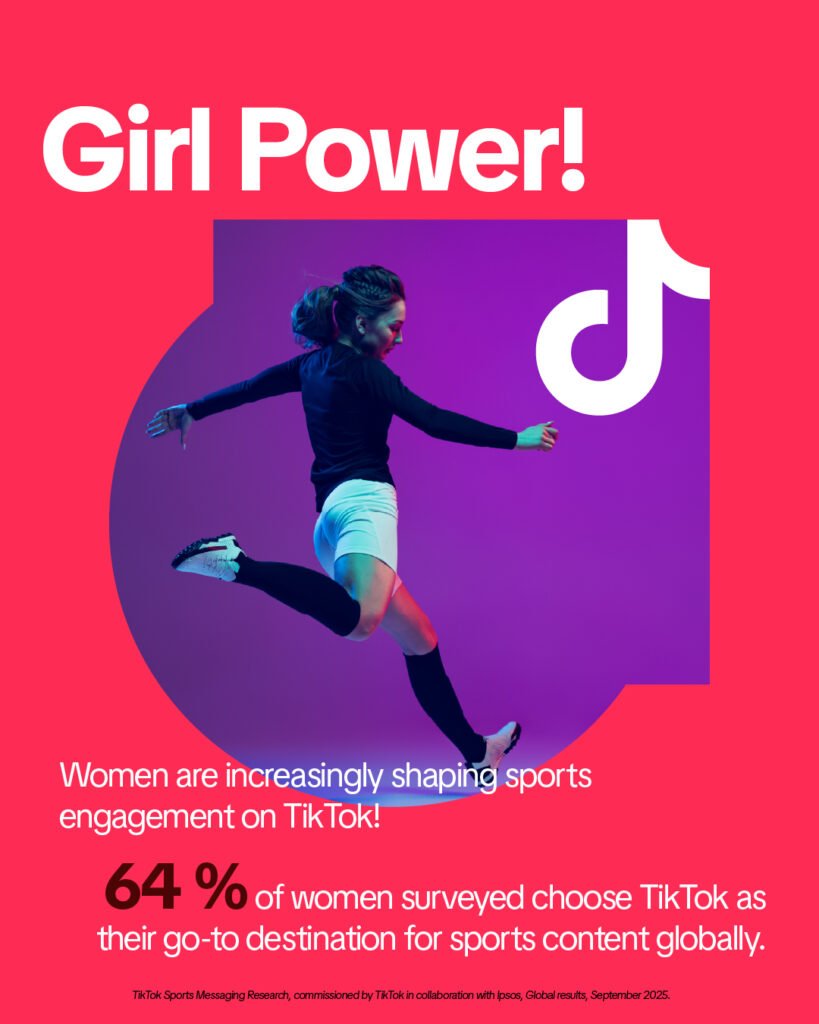
Perhaps the most quietly significant shift is in who counts as a sports fan at all. The stereotype of the male-dominated terrace is being dismantled in the data. Globally, 64% of women name TikTok as their go-to destination for sports content, and women accounted for 46% of all sports-related views on the platform in the first half of 2025. That is nearly half the room.
For a media brand built on the belief that sport is culture; that athletes are style icons, storytellers and figures of public life as much as competitors, this matters enormously. A more inclusive fandom is a richer one. It widens the kinds of stories worth telling and the audiences ready to receive them.
The Arena Has Moved
It would be easy to read all of this as a story about a single app having a good year. It is bigger than that. What these figures describe is a structural change in how sport is experienced, a move from broadcast to participation, from passive viewership to collective authorship. Underdog teams gain overnight followings. Fan reactions outlive the fixtures that inspired them. Storylines emerge from the crowd rather than the commentary booth.
With the 2026 FIFA World Cup ongoing, that participatory engine is only going to accelerate. The next generation of World Cup culture will not be defined solely by what happens between the lines, but by how millions of fans in Lagos, across Africa and around the world choose to remix, react to and rebuild it. The game will always belong to the pitch. But the arena, increasingly, is wherever the conversation lives.
All statistics in this article are drawn from research shared by TikTok and its commissioned studies (GWI, Ipsos and Suzy), and are presented as the platform’s own findings. They reflect self-reported survey data and platform-recorded activity over the stated periods.
For more sports culture, athlete stories and unfiltered takes, connect with us across the platforms:
- 📸 Instagram: @athletevanity
- 🐦 X (Twitter): @athletevanity
- ▶️ YouTube: @athletevanity
- 💼 LinkedIn: Athlete Vanity