By Mide Alabi Esq.
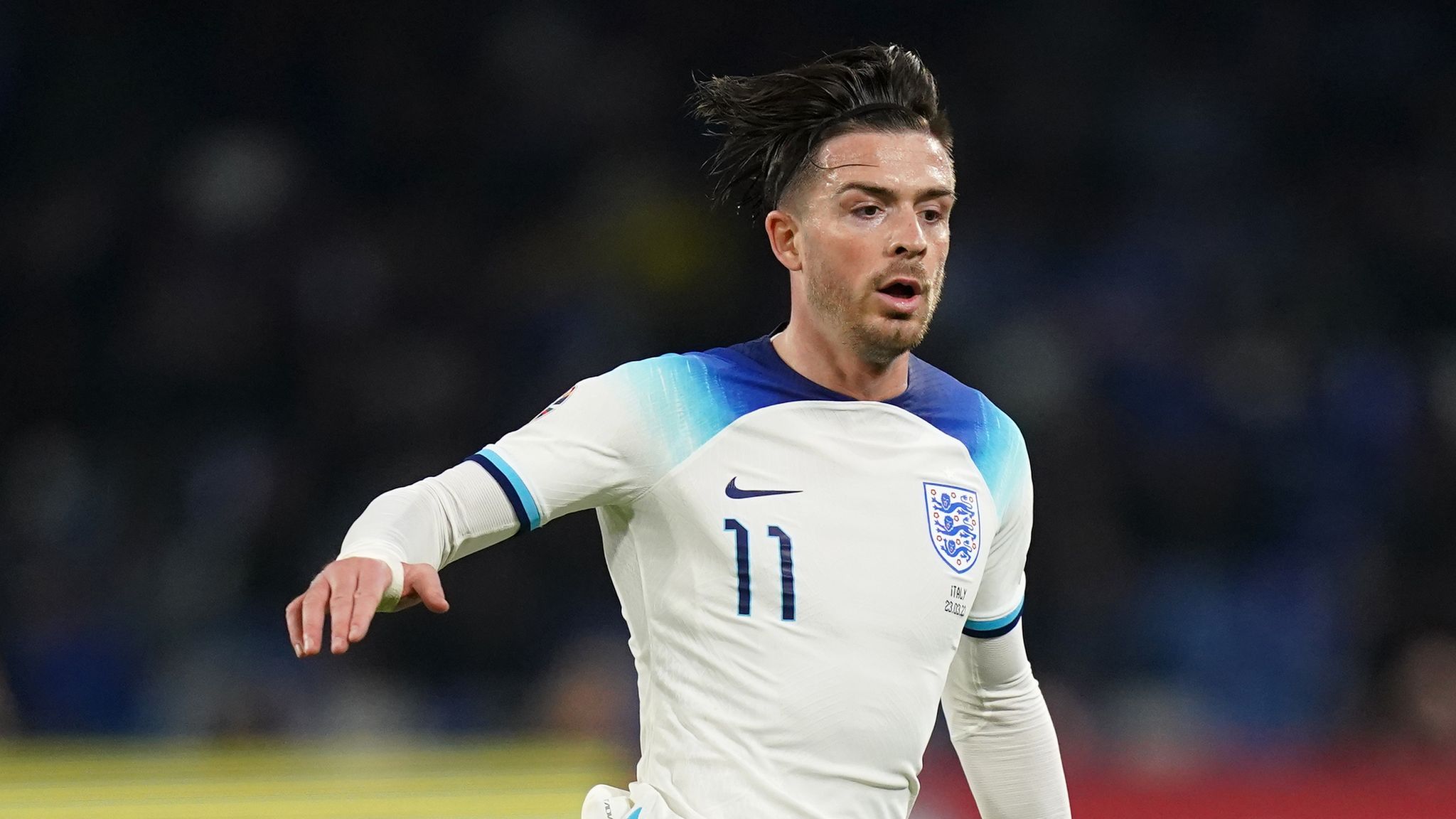
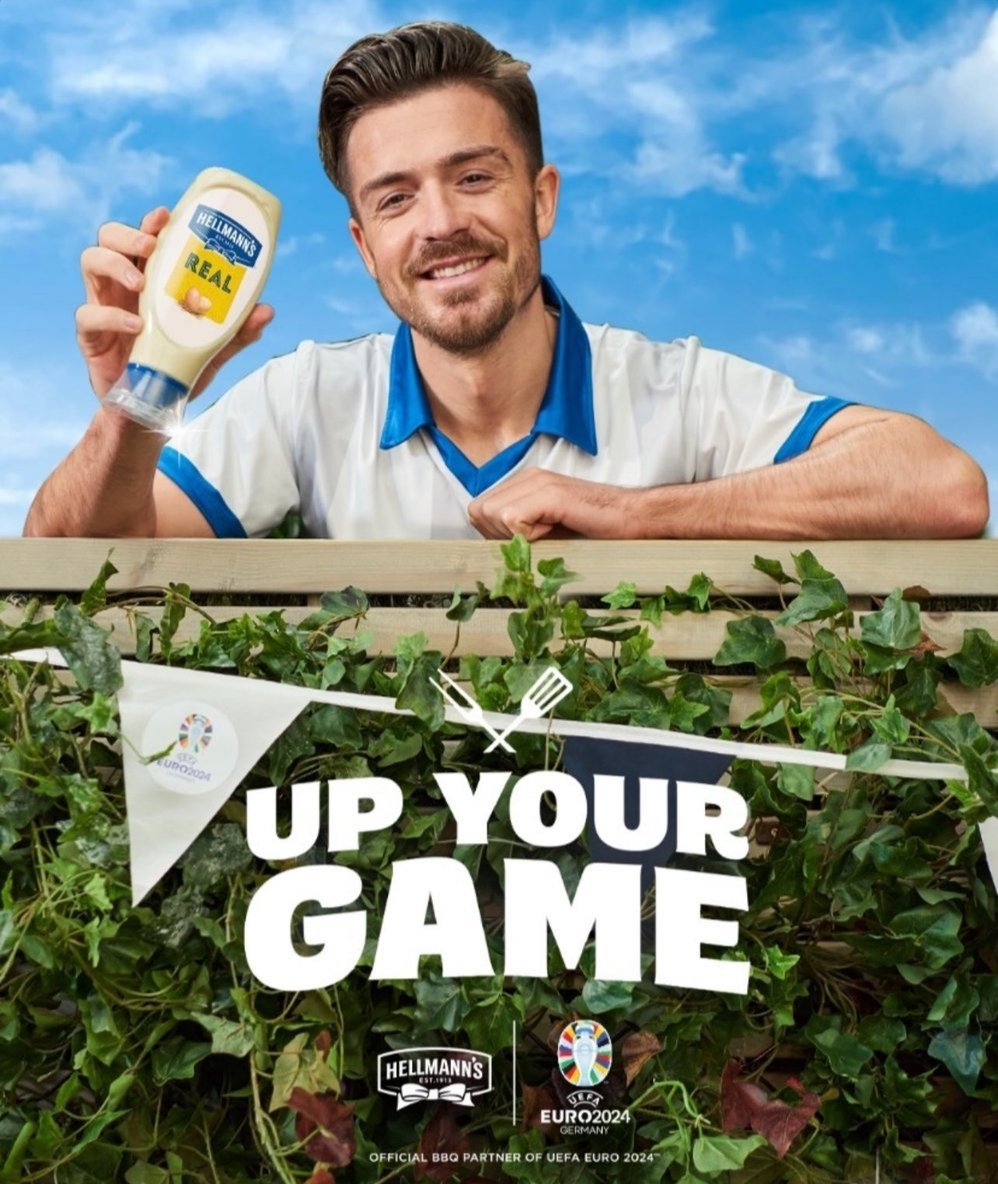
On the day Gareth Southgate announced his Euro 2024 squad, Hellmann’s was posting on Instagram. The mayonnaise brand had built its entire tournament campaign, an £8 million push called Up Your BBQ Game, around Jack Grealish, complete with a burger named after him and a poster pairing his face with a bottle of mayo and the slogan Up Your Game. Within hours of the squad announcement, that Instagram post was full of comments along the lines of “best eaten at home, like Grealish”.
It was undoubtedly a tough day, not only for the then Manchester City winger, but also for his sponsors, who would be rethinking their Euros communications strategy. A football finance expert suggested the whole affair could cost Hellmann’s significantly, because brands sign athletes on the basis that those athletes will be where the brand needs them to be, and Hellmann’s partnership had clearly been built on the assumption that Grealish would be on the plane to Germany.
Two years later, something close to the same thing happened again, this time, perhaps a bit more quietly. In April, Chelsea’s Cole Palmer signed a multi-year deal with Coca-Cola, a campaign explicitly built around the 2026 World Cup and Coca-Cola’s longstanding partnership with the tournament. By late May, England coach Thomas Tuchel had left him out of the squad entirely.
I came across the Palmer story in The Athletic, in an excellent piece by Tom Burrows. The article examined Coca Cola’s next line of action, and got candid, useful answers. Coca-Cola would simply redirect the campaign towards the Premier League season, absorb or repurpose any World Cup-specific content, and move on. The deal itself never appeared to be in jeopardy.
If both campaigns were built around major tournaments and both athletes missed out, the big question is why one brand ended up with a public relations headache while another treated the same problem as a routine business adjustment.
The answer has less to do with football and more to do with preparation. Sponsorship professionals have known for decades that athletes get injured, dropped, benched, or omitted. The risk is neither rare nor surprising. The only real variable is whether the campaign and the contract were built as though it might happen.
The Playbook: Reebok 1992
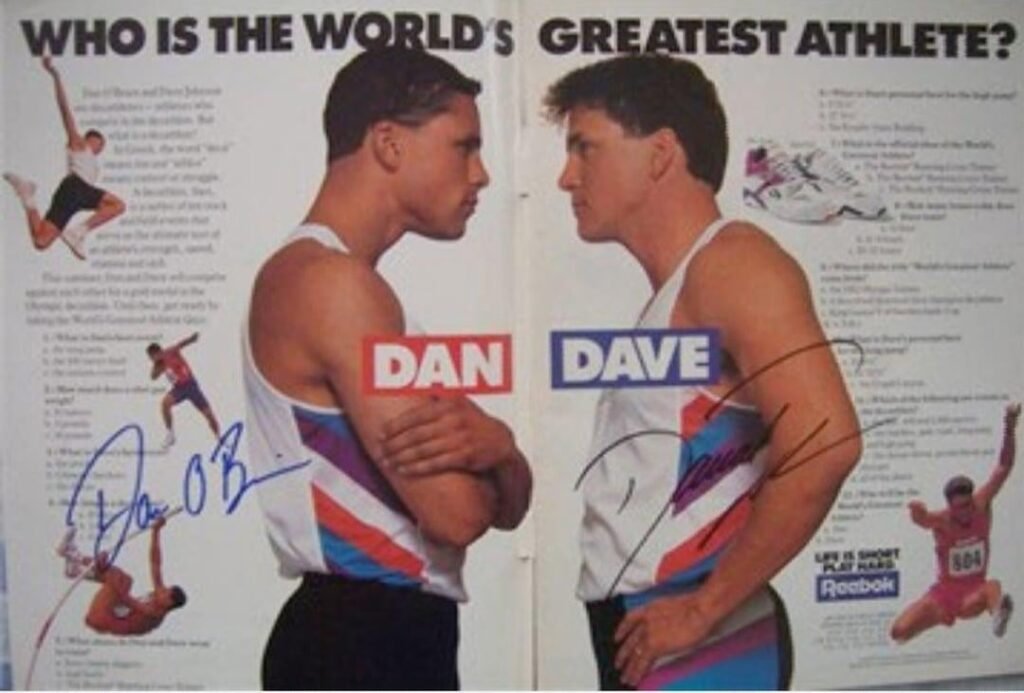
Let me take you back to 1992, and the summer Olympics in sunny Barcelona. In a competition perhaps best known for Michael Jordan and the 1992 US Men’s Basketball Dream Team, Reebok took a risk and built a 25-million-dollar campaign around two American decathletes, Dan O’Brien and Dave Johnson, under the banner Dan and Dave, asking who was the world’s greatest athlete, to be settled that summer in Barcelona. The ads ran during the Super Bowl, the home of arguably the biggest TV ad slots at the time and both men were favourites for medals. It was, by the standards of the time, about as big a sports marketing bet as existed.
Five weeks before the Games however, at the US Olympic trials, O’Brien no-heighted in the pole vault. He failed to clear his opening height on all three attempts and didn’t qualify for the team at all. The entire premise of the campaign, two rivals settling things in Barcelona, was gone before the Games had even started.
Understandably, this was an extremely tricky situation and whatever Reebok did next would decide the future of one of their biggest endorsement investments. Within days, the company was already explaining its next move to reporters. Reebok’s vice president of worldwide advertising told the press that the company had contingency plans based on one athlete not making it, and that the campaign would resume during NBC’s Olympic coverage, with new material built around Johnson, including a commercial reinforcing Reebok’s support for O’Brien even though he wasn’t competing.
By doing this, Reebok ensured that the campaign didn’t disappear; rather, it pivoted fast to a version built around the athlete who was still in the building, and the eventual story, an injured Johnson competing in Barcelona on a broken foot and winning bronze while O’Brien cheered him on, became part of what made Dan and Dave one of the most talked-about Olympic campaigns of all time. Decades later, people in the industry still point to it as a campaign that, despite everything, worked.
Now this pivot wasn’t a lucky break. Reebok said outright that the contingency existed before O’Brien’s trial even happened. The company had clearly thought, in advance, about what the campaign would look like if exactly this happened, and had material and a plan ready to go.
Same Problem, Different Outcomes
Line the three cases up and the pattern is obvious. In each one, a brand built a campaign around an athlete’s presence at a major tournament. In each one, the athlete wasn’t there. And in each one, the difference in outcome had almost nothing to do with the athlete and almost everything to do with how prepared the brand and its lawyers were for the possibility.
Reebok had a contingency plan ready before the bad news arrived, and turned a near-disaster into a campaign people still talk about more than thirty years later. Coca-Cola, going by the tone of the reporting around Palmer, appears to have built a deal flexible enough to absorb the loss quietly and redirect toward the Premier League season, treating it as exactly the kind of thing that happens when you sign footballers. Hellmann’s, by contrast, was caught with live promotional content running on the day the bad news broke, no apparent plan beyond what had already been shot and scheduled, and a campaign that became a punchline before the tournament had even kicked off.
None of these athletes did anything wrong, at least not in a legal sense. Grealish lost form, Palmer didn’t make Tuchel’s final squad, ostensibly due to tactical reasons, and O’Brien had one bad afternoon in New Orleans after years of being the best in the world. These are the ordinary risks of competitive sport, and any brand that has worked with athletes for more than five minutes knows they exist. The question worth asking isn’t why did this happen, because the honest answer is that it happens all the time. The better question is why did it cost one brand tens of millions and humiliation, while it cost another brand almost nothing.
Is the Deal Still Valid?
Here’s where the lawyer in me has something to add, because there’s a question lurking under all of this that’s worth answering properly: if a sponsorship deal is built around an athlete being at a tournament, and the athlete isn’t there, is the deal still valid? Can either side walk away?
The short answer is almost always no, and it’s worth understanding why, because the reasoning tells you exactly where the real protection has to come from.
Start with what these contracts actually ask the athlete to do. Strip away the marketing language, the World Cup framing, the Euros branding, the Olympic tie-in, and what’s usually left is a list of deliverables: appearances, content shoots, social media posts, the right to use the athlete’s name and image across the brand’s marketing. None of that becomes impossible because the athlete didn’t make a squad. Grealish could still front adverts, Palmer could still shoot content for Coca-Cola, and Dan O’Brien was still Dan O’Brien: famous, marketable, and available to appear in ads about Dave Johnson’s Olympic run. The deliverables remained achievable. What changes is how valuable they are to the brand, not whether they can happen at all.
That distinction, between a contract becoming impossible and a contract becoming merely less valuable, is one of the oldest dividing lines in contract law, and it matters because of a doctrine called frustration. Frustration is the legal escape hatch that lets a party walk away from a contract when something happens that makes performance radically different from what was originally agreed, so different that holding the parties to the deal would be unjust. The classic English case of Krell v. Henry is about a man who rented a room specifically to watch a coronation procession pass by. When the coronation was postponed, the court excused him from paying for the room, because the entire point of the contract, watching a procession that was no longer happening, had evaporated.
A sponsorship contract surviving an athlete’s non-selection doesn’t look like that at all. English courts have been consistently strict about this, treating frustration as a narrow doctrine that doesn’t apply just because a deal has become less profitable or less exciting for one side. If Hellmann’s had gone to court arguing that Grealish’s omission frustrated its sponsorship contract, it almost certainly would have lost, because nothing about the contract became impossible. It just became a much worse deal than Hellmann’s had hoped.
Why Force Majeure Won’t Save You
When something like this happens, there are two instincts that brands and their lawyers sometimes reach for, and both tend to be dead ends.
The first is to check the force majeure clause and hope non-selection fits inside it. Force majeure provisions exist to excuse performance when something genuinely outside anyone’s control makes performance impossible, things like natural disasters, war, government shutdowns. A coach’s selection decision doesn’t naturally fit that description. It’s not outside the realm of foreseeable business risk in sport, and it doesn’t actually stop the athlete from doing anything the contract requires. Many force majeure clauses are also written as closed lists rather than open-ended categories, which means if non-selection isn’t on the list, or captured by genuinely broad wording, a party invoking it is likely to be told the clause simply doesn’t cover this situation.
The second instinct is to argue that even though the contract doesn’t say so in writing, everyone obviously understood that the deal was conditional on the athlete making the squad, so a court should treat it that way anyway. This is an argument about implied terms, and courts set the bar for it deliberately high. A term will only be implied into a contract if it’s necessary to make the contract work at all, or if it’s so obvious that both sides would have agreed to it without needing to discuss it.
The trouble for any brand making this argument is that non-selection for a national team is exactly the kind of risk that sophisticated parties, the kind who can afford multi-year, multi-million-pound athlete partnerships, are expected to think about and write down. A court is far more likely to conclude that the absence of a selection-related clause means the parties chose not to include one, than to insert one after the fact because a brand wishes it had.
Put plainly: once the squad list is announced, it’s too late to fix the contract. Whatever protection exists has to already be written into it.
What Good Drafting Actually Looks Like
This is where Reebok’s example becomes genuinely instructive, because the company didn’t just get lucky with how the story eventually played out. It had, by its own account, planned for the possibility that one half of its campaign might not make it to the Games. That kind of planning isn’t really some obscure legal trick, but rather a way of structuring the deal so that the marketing premise, two rivals settling it in Barcelona, and the underlying contractual relationship, paying two athletes to represent the brand, are treated as related but separable things.
Applied to a modern endorsement deal, that separation means a few specific things. The core obligations, the appearances, the content, the use of the athlete’s image, should be defined so they stand on their own regardless of whether the athlete ends up at the tournament. If certain payments, bonuses, or campaign phases really are meant to depend on the athlete being selected, that should be written down explicitly, along with what happens to the rest of the deal if that condition isn’t met.
The brand should have a clear, pre-agreed right to redirect the campaign toward something else, the athlete’s club season, a different competition, a different message entirely, without needing to renegotiate everything from scratch. And there should be some agreed approach to content that was made in anticipation of the tournament but can no longer be used as planned, whether that’s reworking it, shelving it, or having the athlete available for fresh material instead.
None of this requires predicting which athlete will be dropped or which one will get injured. Reebok didn’t know in January 1992 that O’Brien specifically would no-height in June. What it knew was that betting an entire campaign on both men making the team carried a risk worth planning for, and it planned for it. That’s the whole exercise. Not predicting the outcome, just refusing to be surprised by it.
The Part Nobody Controls
Every few years, this exact situation repeats itself somewhere in the world, a World Cup, a Euros, an Olympics, an AFCON, a major awards show with a brand ambassador attached. An athlete or artist who was expected to be central to a campaign isn’t there when it matters, for reasons that usually have nothing to do with the brand and often nothing to do with anything the athlete did wrong either. It happened to Reebok in 1992, it happened to Hellmann’s in 2024, and it’s happening to Coca-Cola right now.
What separates these stories isn’t whether the bad news arrives, because it always can, but rather, what truly separates them is whether anyone sat down beforehand and asked what happens if it does, and wrote the answer into the contract while both sides could still agree on it calmly. Reebok asked that question in advance and got a campaign people still talk about thirty years later. Hellmann’s didn’t, and got a burger nobody wanted to eat.
Brands may not necessarily be able to control all things related to their star, but they can control the contract, and as such, the importance of proper contingency drafting cannot be overstated.
Mide Alabi is a lawyer and the co-founder of Trellis Africa, a compliance infrastructure firm working with startups and growing businesses.
Follow Athlete Vanity
For more sports culture, athlete stories and unfiltered takes, connect with us across the platforms:
- 📸 Instagram: @athletevanity
- 🐦 X (Twitter): @athletevanity
- ▶️ YouTube: @athletevanity
- 💼 LinkedIn: Athlete Vanity