
EXPERT INSIGHT · VOL. 01
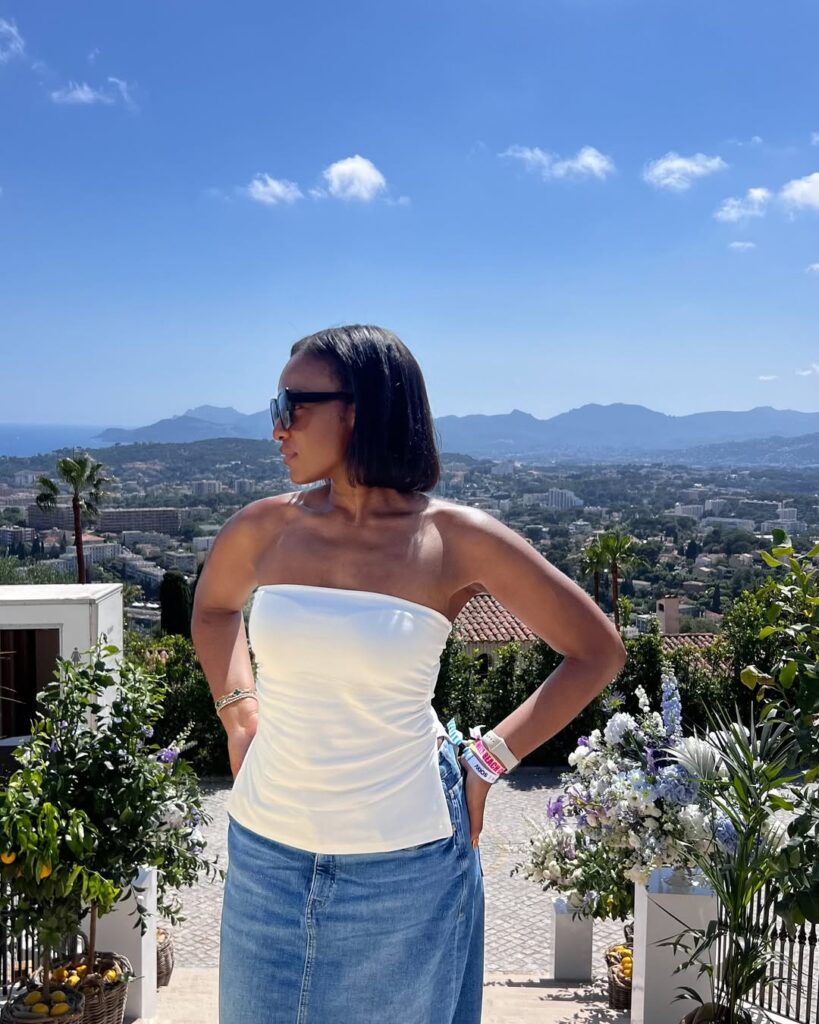
Welcome to Expert Insight, a new Athlete Vanity series where we sit down with the strategists, operators, and culture-shapers building the next era of sports. For our debut, we’re talking to Prisca Moyesa, founder of Moyesa & Co., Brand and Influence Marketing Specialist and marketing professor at ISCOM Paris. With 12 years of international experience, she works with startups, C-suite executives, and high-visibility clients on the kind of social-first strategy that actually moves culture. We spoke on the rise of athletes as media operators, the streaming boom, and what “authenticity” really means in 2026.
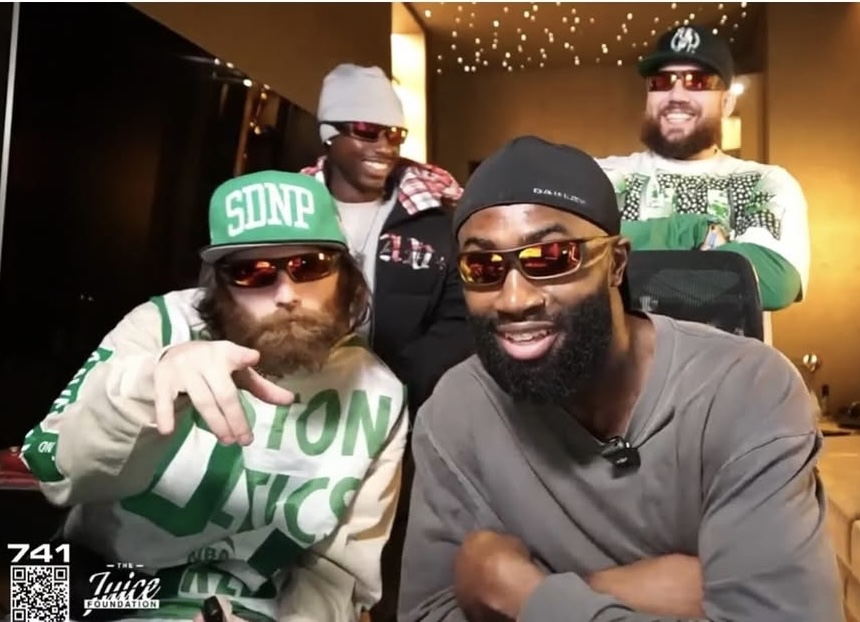
The idea of athletes as media operators feels pretty nouvelle. How would you describe what Jaylen Brown is actually doing when he goes live on Twitch after a game?
It has definitely developed over time, and those of us paying close attention saw it coming. What Jaylen Brown is doing is smart. He’s contextualised his strategy by anchoring it to a real-world event: his basketball games. That’s unique to his story and makes it feel authentic rather than performative. He’s clearly been inspired by the streaming world, and with every stream you can tell he’s leaning into it and making it his own.
Who was the first athlete you saw show up on a streaming platform? When you saw that, was there a tingle of your marketing instincts?
Ha! I love this question. I can’t remember who showed up first, my historical mental dataset isn’t that intricate, but I do remember who made the internet stop. It was WNBA athletes Courtney Williams and Natisha Hiedeman, also known as Studbudz. I was excited to see their personalities shine and witness two women take their on-court camaraderie online. They’re also a great case study on knowing when to slow down, and I’ll leave it at that.
Athletes have always had some form of direct-to-fan media like autobiographies, social posts, editorials on platforms like GQ Sports, The Players’ Tribune. What specifically does livestreaming do that those earlier formats couldn’t?
A point of view naturally goes beyond the surface. Formats like The Players’ Tribune gave athletes a voice, but it was still edited, still shaped. Livestreaming removes that entirely, there’s no second draft, it’s real-time participation. Fans aren’t just consuming the streams, they’re hopping in the room. You see that with Jaylen Brown, where fans jump in live and the content becomes a shared experience rather than one-way communication. That’s the depth people want from high-visibility figures, both the emotional access and the feeling that they can witness and experience a moment that is unedited.
“Short-form content can be rehearsed, a caption can be workshopped, but a stream cannot and viewers know this.”
Prisca Moyesa
“Authenticity” has become a buzzword that’s almost lost its meaning in marketing. In your view, what actually makes an athlete feel authentic to an audience and why do long-form streams crack that code?
The industry has grown fast and the word authenticity has grown with it, to the point where it’s lost some of its meaning. I’ve been in marketing since 2008 and the fundamentals have always mattered more than the vocabulary. When a word gets picked up by everyone it starts to mean nothing, and that’s what’s happened here.
What actually makes an athlete authentic is when they tap into those key human instincts: joy, passion and purpose. When we see those things shine, it signals something real. And long-form streaming is where that gets unleashed, because you simply cannot sustain a curated performance for one to two hours. The performance naturally slips. Short-form content can be rehearsed, a caption can be workshopped, but a stream cannot and viewers know this.
Is there such a thing as too much access? Where does “authentic” end and “oversharing” begin and how should athletes think about that line?
Yes, there is. Brand building isn’t oversharing, it’s strategic placement. And strategy is the word that matters here. Applying marketing frameworks to figure out what the output should look like is where one can share a lot and not too much at the same time.
A great example is what Jared McCain is doing right now. He’s dancing to trendy songs, you can see the different ways he paints his nails, he’s in different locations from hotel lobbies to his own. That gives the audience something to latch onto. We feel like we know when he’s just had a game, a practice or is simply chilling, but at the same time we know absolutely nothing about what gets him down, what stresses him out or what he’s invested in. That’s strategic withholding, and it’s just as important as what he does share. He’s keeping his audience entertained throughout, and that’s another key engagement pillar. For now, he’s mastered the sweet spot.
Jaylen Brown has said plainly that he streams because traditional media is “lazy” and chases clickbait. From a marketing strategy perspective, how risky or smart is it for an athlete to publicly bypass the press and does that stance scale to athletes who don’t yet have his leverage?
Jaylen is bold, and I love that about his output, but he is also strategic. And let’s be clear, this comes as a result of him spending over 10 years in the league. He understands the rules and regulations of the Boston Celtics and the NBA, so he’s checked in on that. But he’s also in a space where he’s shared his perspective alongside other current and former basketball players who have spoken about launching their own media platforms to control and shape their own narrative. He knows what the risks are and has the leverage to take that stance. Smart move for him specifically, but it’s conditional.
Draymond Green is a great example of owning these intentions too. He shared that he wanted to build out his own media presence deliberately to shape his own narrative.
I bridge the gap between the old and the new though, so I believe press can be a good thing. We see it all the time where journalists ask profound questions and we get great insights from it. The signal for me is that there needs to be interest and incentive for the athlete to want to engage, and that’s down to keeping credible journalists in the room who do their research and know how to toe the line between what they want to know and their respect for the person who just dropped 40. As for scaling, bypassing the press isn’t something that should be adopted across the leagues. It’s part and parcel of the role. It’s about balance.
What does an athlete actually gain commercially by streaming consistently? Walk us through the value.
It’s a long-term play. Having analysed athletes closely, I’ve seen many wait until retirement to start building their brand. There’s still an audience for that, but the commercial impact is far greater when you drip-feed throughout your career, not after it.
The consistency streaming requires is what nurtures an audience. Unlike traditional media, they have direct access to that audience with nothing in those moments dictating the narrative. Today, these platforms also generate direct revenue, so the commercial case is evident from day one. It also opens doors to brand partnerships that extend well beyond the sport, and particularly for women, it helps supplement income in a space where pay disparities are still present.
The commercial pros outweigh the cons, but put a mic and camera in front of any one of us in the comfort of our own homes and the probability we say something out of pocket is high, which is why having the right experts matters.
How do brand partners evaluate an athlete who has a strong streaming presence versus one who doesn’t? Does a live audience hit differently on a deal sheet than a big Instagram follower count?
There are a few key factors, but the data really matters. Marketers have the tools that allow us to dig deeper into specific metrics and measure whether they hit the benchmarks a brand needs. Typically, that means engagement rate against follower count. An athlete with a strong streaming presence shows consistency, community and real-time influence. An athlete with a large Instagram following shows reach but reach without proof of engagement is a harder sell. A live audience does hit differently. Live numbers over a consistent period of time will always carry more weight. It speaks to an active, invested community, and that’s what brands are really paying for.
What’s the most common mistake athletes (or their agents) make when they try to turn streaming or social content into a revenue stream?
The most common mistake is treating streaming as a short-term tactic. If you’re going to dig into it, let it be a long-term commitment and not a fleeting strategy of going live a few times, because it will impact engagement and credibility. The second is underestimating the audience. Viewers are smart, they are masters at consuming content, so although they love the access, they are comparing athletes to creators they already engage with daily. The third is misunderstanding what streaming actually is. It’s not a press appearance, it’s not content in the traditional sense, it’s a different approach entirely and understanding that distinction matters.
What does a rookie or an up-and-coming athlete — someone without Jaylen’s platform or résumé — need to do differently if they want to build a real streaming audience? Is it still worth doing if you’re not already famous?
Yes, absolutely. For a rookie, every time a game is streamed, it’s an introduction to a new fan. Every athlete has some form of branded team or league profile, so they already have a foundation to build from. There’s going to be a kid in Dakar who loves that player, and that word of mouth travels. Fan accounts will also pick up and push that content out.
But for an up-and-coming athlete without the platform or résumé, personality can do the heavy lifting. Fame gives you reach, but personality builds a community. You don’t need to be the starter to be someone’s favourite player, you just need to give people a reason to check you out.
“Fame gives you reach, but personality builds a community.”
Prisca Moyesa
African and diaspora athletes are often underrepresented in global sports media narratives. Can streaming help them reach audiences that traditional sports media has historically ignored?
Streaming has the power to do that, but it shouldn’t be the first point of action. African and diaspora athletes need to gauge interest first. Start with social media platforms, build a presence, understand who is engaged and why.
Once that foundation is there, streaming becomes the natural progression. Not every athlete’s story or gameplay makes the news cycle, but a good stream can generate clips that do, and then the algorithm will let compelling content travel regardless of where you’re from.
For athletes in sports with tighter league restrictions — where media access is controlled — how do you adapt this without running into compliance or PR landmines?
The safe zone is always performance. What’s already permitted on television and in official league streams sets the baseline for what an athlete can comfortably build around. Those are the low-risk entry points.
Where it gets more complex is when athletes want to go further, share opinions on all facets of their lives and address narratives. A PR landmine isn’t always obvious in the moment, which is why having the right consultants at the table matters. At Moyesa & Co. we work with high-visibility clients to navigate exactly that, making sure the client’s presence is both protected and strategic. The athletes who do this well aren’t winging it, there’s a framework.
What’s a trend in athlete-as-media that you think is quietly coming, but that most people aren’t talking about yet?
Not all media has to be opinion-based. We’ve seen it with Charles Leclerc, a unique brand identity and strategy that holds up on its own. You can tell there’s a board of advisors behind him. That advisor-led approach shows up with Angel Reese too aas she’s got multiple touchpoints; she’s the perfect case study for how bespoke and boutique can trump a big establishment at times. A’ja Wilson has taken a different approach, and it works for her too.
But what I see coming, globally, is athletes as ecosystems. The ones who are quietly building that infrastructure right now are the ones we’ll be talking about in ten years guaranteed.
If you were building a five-year marketing strategy for an athlete right now — someone young, ambitious, globally minded — where does streaming sit on that strategy?
Gone are the days where we can think five years ahead. We can touch on key tournaments but that’s about it. One-to-three year intervals matter more. Direct-to-fan connection and community building come first, and streaming is one of the most powerful tools for that because of the nature of the medium but its place in the strategy is personalised to the athlete.
Final one: if you could give every athlete, manager, and agent reading this one piece of advice about the streaming era, what would it be?
Talk to experts who are practitioners. Don’t lean on your own understanding. Athletes have a coach for their sport but not always for their personal brand. It’s a science. Even as I teach and work, staying ahead of the ever-evolving landscape is non-negotiable for my clients.
Bring in external advisors who can bridge the gap between the athlete, culture, corporate and creative, people who understand all four worlds fluently. The best advisor relationships are mutual ones. Just as the athlete has mastered their sport, a good advisor has mastered their field, and when those two worlds meet with equal respect, that’s where the best strategies are built.
At Moyesa & Co. that’s exactly the relationship we create, one where the vision of our high-visibility clients stays at the centre.
About Prisca Moyesa
Prisca Moyesa is the founder of Moyesa & Co., a marketing consultancy advising high-visibility clients on brand strategy, positioning, and the business of athlete media. With nearly two decades in marketing, Prisca bridges the gap between athletes, culture, corporate, and creative.
Stay Close to Athlete Vanity
Expert Insight is just the beginning. For more conversations, athlete features, and culture-forward sports coverage, follow Athlete Vanity across every platform:
- 📸 Instagram: @athletevanity
- 🐦 X (Twitter): @athletevanity
- ▶️ YouTube: @athletevanity
- 💼 LinkedIn: Athlete Vanity